A menu for two or three days should be filling, easy to prepare, and suitable for route conditions. This guide offers a simple planning sequence.
Food for the trip
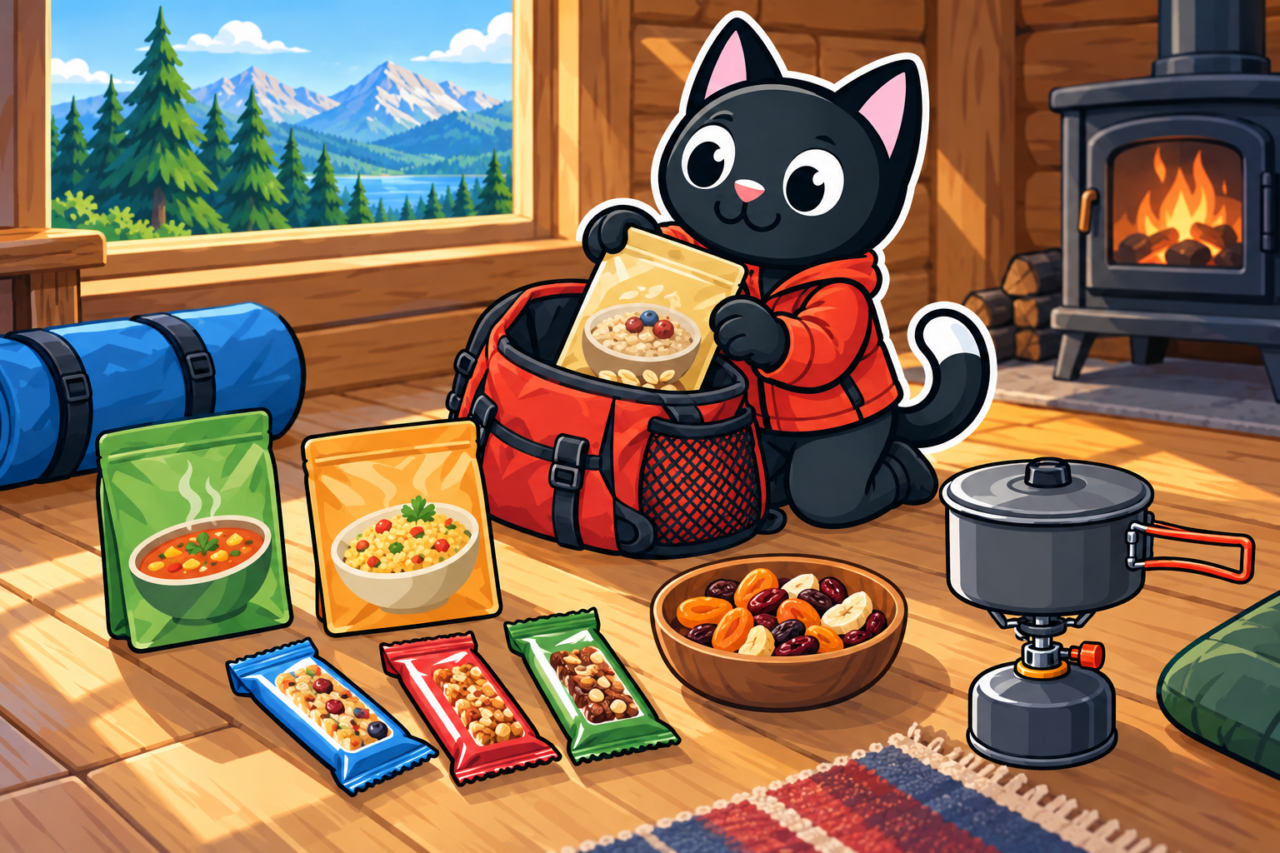
Choose food that can be stored at the expected temperature. Storage requirements may differ before and after a package is opened, so read the small print before buying. Quick-cooking grains, dried vegetables, crispbread, nuts, and commercially packaged products generally travel better than homemade salads and raw meat. Decide when the group will open each package so its properties match the meal schedule.
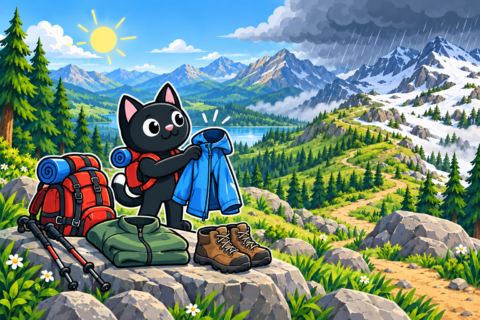
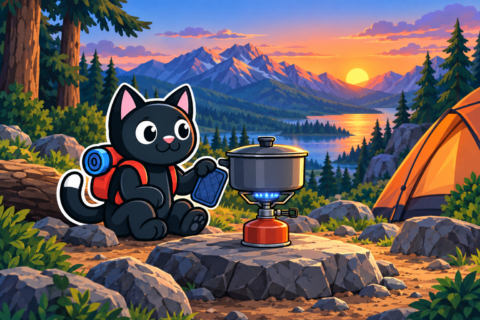
Prepare every new dish at home in the camping pot. Measure the water, fuel use, and cooking time. This will also show whether one stove is enough for the group and whether the shared portion fits. Check that dried ingredients soften properly; repeating the experiment at an evening campsite will be harder.
Example for two nights
Day one
- Breakfast: at home before departure.
- Lunch: flatbread or crispbread, an individually packaged spread with suitable storage requirements, a firm vegetable, and tea.
- Dinner: couscous with dried vegetables, spices, and a small amount of vegetable oil.
Couscous is convenient after a late arrival because it uses little fuel. Portion the additions in advance so all that remains at the pot is to pour the mixture into measured water. When the group reaches camp at dusk, this preparation shortens stove time. A measured portion also preserves food for the remaining meals.
Day two
- Breakfast: oats with powdered milk, raisins, and nuts.
- Lunch: flatbread with nut butter, an apple, or another durable fruit.
- Dinner: buckwheat flakes with dried vegetables and a prepared protein addition.
If you want mushrooms, use a tested mix with a clear cooking time. Some dried mushrooms require lengthy soaking and boiling, so learn the preparation method before departure. A chance purchase can leave the group with a tough dinner and an empty fuel canister. Test the chosen addition with the main dish at home to see whether it suits an evening campsite.
Day three
- Breakfast: muesli with powdered milk or a repeat of a successful porridge.
- Lunch: crispbread, a reserved portion of spread, nuts, and dried fruit.
- Dinner: after returning, if the schedule supports it.
Alternate snack flavors and textures so the same food does not become tiresome over several days. Sweet food can lift morale, while something salty often feels more appealing after several hours of walking. Distribute daily portions in the morning so everyone can track their own supply. On a long section, a participant can retrieve a suitable snack without stopping the group to open a shared bag.
Adapt the menu to the people
Ask in advance about allergies, medical restrictions, and foods a person cannot tolerate. The shared pot will not then leave anyone without a suitable dinner. Label meals, for example, “Saturday dinner, four portions.” Salt, sugar, and powdered milk look similar in bags, so labels help even an experienced group. If cooking must happen in poor light, large writing will make the right ingredients easier to find.

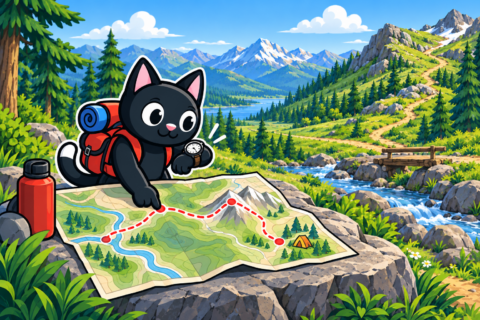
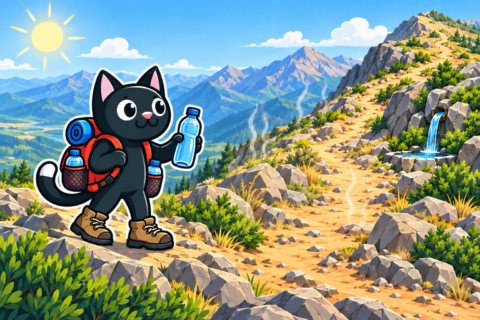
Check that each section has enough water for both food and drinking. Dry meals save starting weight only where a source is genuinely available. If a stream is seasonal or uncertain, cooking water must be carried with the food. Imagine reaching a dry channel at the evening campsite: the supply must cover dinner and the group’s drinking needs. Compare recipes with the source plan while building the menu.
Backup plan
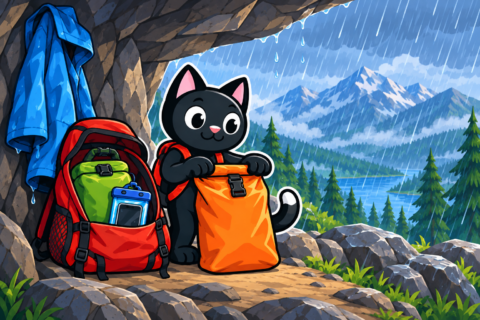
Keep a full meal that can be eaten cold during heavy rain, strong wind, or a stove failure. The group can then eat dinner even when cooking over a flame is temporarily impossible. Choose a separate delay reserve according to the route’s remoteness and available exits to a road.
Important: prepare only as much as the group will eat immediately. Leftovers without reliable refrigeration quickly become unsafe even when they look and smell normal. After dinner at camp, do not count on yesterday’s portion for the next lunch. Tested dishes let you estimate food quantities and cooking time more accurately. A simple menu gives the group more confidence than culinary experiments at dusk.
How to pack the menu
Place every meal in a separate durable bag labeled with the day, dish, number of servings, and water volume. At the pot, it will be immediately clear which set to open and how much liquid to measure. Write the instructions large enough to read by headlamp. Put breakfast near the top of the evening backpack so you do not have to empty everything onto damp ground in the morning. Bags arranged in order are also easier to compare with the schedule.
Before starting, weigh the daily sets and compare participants’ loads. An even distribution simplifies packing, and backpack space becomes available predictably as the trip progresses. If one set is noticeably heavier, divide it with the rest of the equipment in mind. Collect rubbish in one sealed bag and carry it out.