Your first overnight hike adds camp, sleep, and meal tasks to an ordinary walk. Here is how to choose a route and prepare without unnecessary complexity.
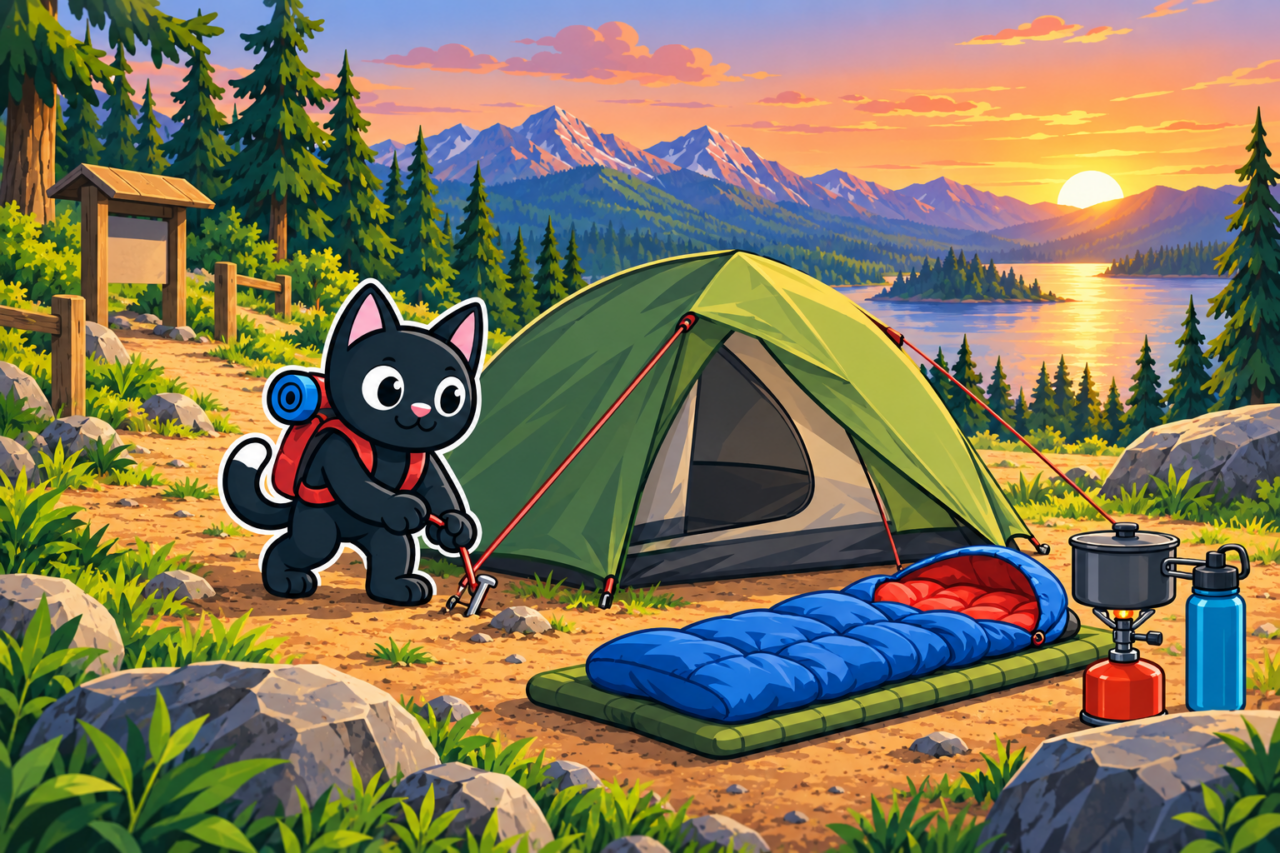
Choose a nearby campsite
Choose a site only a few hours of easy walking away with a clear route back. A full pack makes a familiar distance much harder, and after a long stage less energy remains for the tent and dinner. A nearby site leaves daylight for learning camp routines and makes an early return practical.

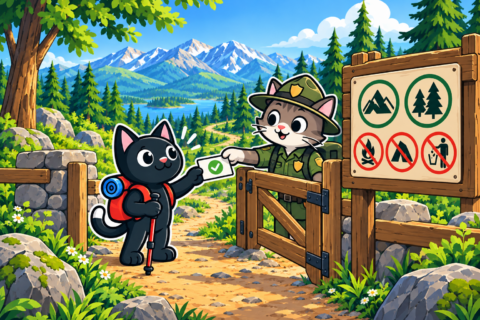
Find out where camping is allowed
Check the current rules for the chosen area. Protected land often permits tents only at designated sites, and some places prohibit overnight stays. Match the rule to the exact location so you are not searching for legal ground after dark.
Important: an old fire ring or another tent does not prove camping is permitted. Check fire and stove rules separately. If your normal cooking method is prohibited, learn that before packing the kitchen and follow the current official rules.

Find the water source and calculate what must be carried to camp. If information about the source is unreliable, choose another site or bring the full supply. For a first trip, use a place you can reach while carrying all necessary water so a dry seasonal stream does not force an evening search.
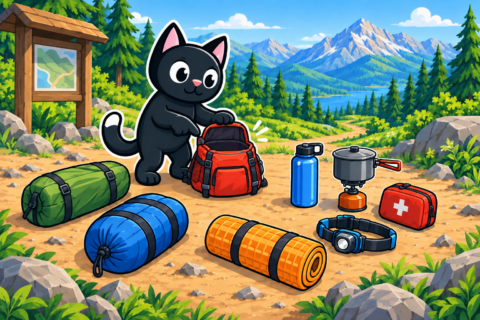
Prepare sleeping equipment
At night you lie still and feel colder than while walking. Choose a sleeping bag by its comfort rating, the forecast, and your sensitivity. The “extreme” value is an emergency reference, not a planning temperature. Use a comfort margin rather than the lowest number on the label.

A sleeping pad separates you from cold ground. Even a thick sleeping bag cannot replace one, so select the overnight system as a bag-and-pad combination. Poor ground insulation becomes obvious only when you lie down to rest.
When renting, ask about specifications and inspect the complete kit. Inflate an air pad at home and leave it for several hours. If it leaks, there is still time to replace it before the trip.
Pitch the tent at home
Pitch the tent once in a yard or park. Calmly check poles, pegs, guylines, zippers, flysheet tension, and vents. This practice saves time when camp must be established at dusk.
- all poles, pegs, and guylines are present;
- the zippers work;
- you know how to tension the flysheet;
- you know where the ventilation openings are.
At dusk the group needs both shelter and dinner. Familiar setup means nobody studies instructions in an unlit campsite. Learn each component at home, then simply repeat the sequence outdoors.

Reach camp before dark
Before darkness you must select a site, pitch the tent, and prepare food. Include all these tasks in the arrival time. A late arrival removes the chance to inspect the ground and trees calmly, so preserve extra daylight on a first trip.

The pitch should be level and inside an area where camping is allowed. Consider where rainwater will flow and check overhead branches, cliffs, stream channels, and damaged trees before unpacking sleeping gear.
- it is level and within the permitted campsite;
- rainwater will not flow beneath the tent;
- there are no dead branches above it;
- it is away from cliff edges and streams, as well as unstable trees.



Remove only small objects that prevent comfortable sleep, such as sharp stones. Do not cut bushes or dig the ground to fit the tent. If major changes are needed, choose another pitch and leave the site intact.
While it is light, separate dry sleeping clothes from the walking set. Keep the lamp, shoes, and glasses close, learn where guylines run, and clear paths between tents. At night, leave the tent with a light and a mental picture of camp.
- pack dry sleeping clothes separately and do not wear them while walking;
- keep the lamp, footwear, and glasses within reach;
- remember the guylines and go outside at night only with a light;
- keep paths clear between tents.


Dinner
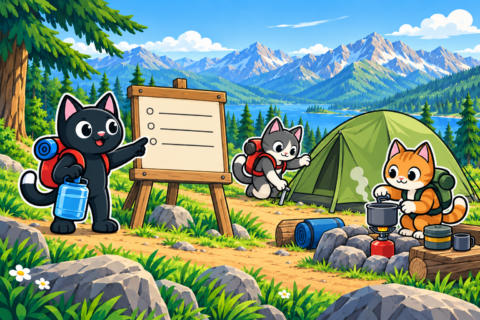
Choose a simple meal and test it outdoors on your stove where permitted. A home trial shows whether the recipe is clear and how much fuel it uses. Adjust an awkward cooking sequence before the trip and preserve more time for camp.
Caution: cook only outside the tent on a stable surface, following the stove instructions and local rules. Inspect the spot before placing food and cookware. A stable stove is easier to monitor safely.
Before evening, decide who fetches water, cooks, and washes dishes. Leaving every task to one person delays dinner. Known roles let several camp jobs proceed at once, which matters after walking with full packs.
Store food and waste according to local rules, especially where wildlife is present. Learn the campsite requirements before departure so everyone knows where packaging and leftovers go after dinner.
Morning and packing
- Pack dry items first: sleeping bag and clothing.
- Keep a wet flysheet separate from the inner tent and sleeping bag where possible.
- Inspect the site before leaving; scraps often remain where backpacks lay.
- Dry the tent at home.

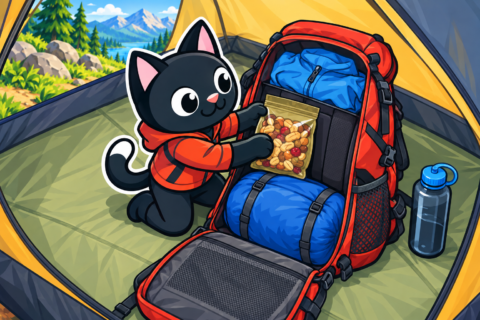

Everything carried in must be carried out. Check the tent area, backpack places, and cooking spot before leaving. Small scraps are easiest to find while the group is still in camp, after which you can begin the route home.