The water you need depends on the weather, exertion, and opportunities to refill along the way. This guide explains how to calculate the volume for a particular route.
Start with the map
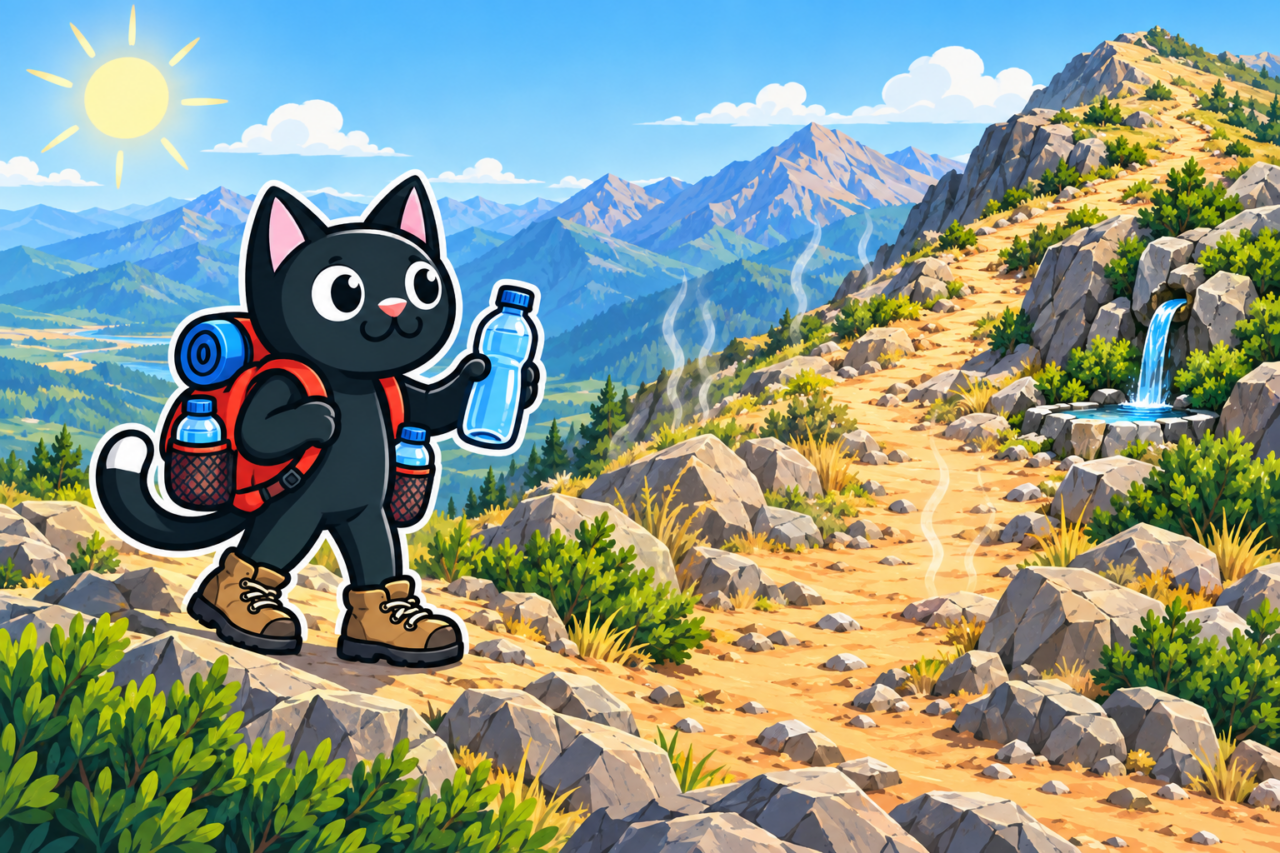
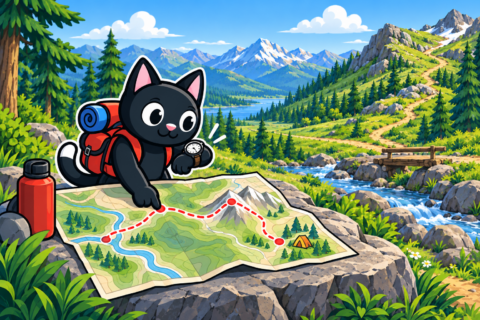
Mark the start, finish, water sources, settlements, and possible exit points. Check recent reports: streams dry up, wells close, and rain makes water turbid. A stream may look reliable on the map even when a recent report says otherwise. If information conflicts, treat the source as unreliable and plan without it. The section to the next confirmed water point will then reveal its true length.
Divide the route into sections between refill points. For each, estimate travel time, elevation gain, shade, surface difficulty, and access to the next source. If the trail climbs an exposed slope, distance alone is a poor guide because travel may take longer. The longest dry section determines the necessary container capacity. Check that each participant’s bottles can hold the calculated amount.

Estimate personal consumption
On a short practice walk, carry a measured amount and record how much you drink. Repeat the exercise in similar weather and under a comparable load to make the comparison useful. Your own observations are more accurate than someone else’s rule: people differ in pace, body size, acclimatization, and habits. If you drink more than usual on the test climb, include that in the estimate for a similar section. Notes will replace guesswork before your next outing.
Drink regularly in response to thirst and how you feel. A rigid schedule that forces large amounts can be as harmful as ignoring thirst for a long time. Monitor your condition during the trip, especially as weather and exertion change. Fluid guidance differs for some medical conditions; discuss it with a doctor before a self-supported hike.

Add water for camp
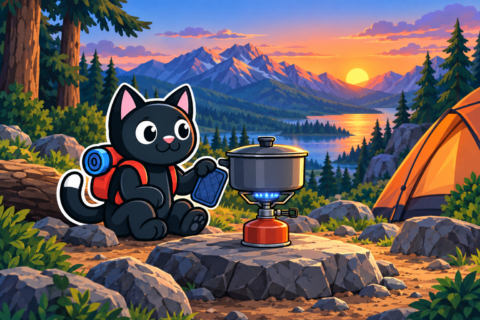
The calculation includes porridge, dehydrated meals, tea, washing dishes, and taking medication. Record the volume for every recipe after a test preparation so evening use is not a surprise. Dry food moves water weight from the product into your bottles: its low starting weight helps only near a reliable source. On a dry section, dinner water must be carried with the packages. Add camp needs to drinking water before choosing containers.
At an overnight stop, collect the required supply before dusk. Walking to a distant stream in darkness increases the risk of a fall or wrong turn. If camp is above the source, include the time and effort for an extra descent and climb. After a long hiking day, this may become a significant evening task. Collecting early allows the group to cook and drink without returning to the stream at night.

Weather changes the calculation
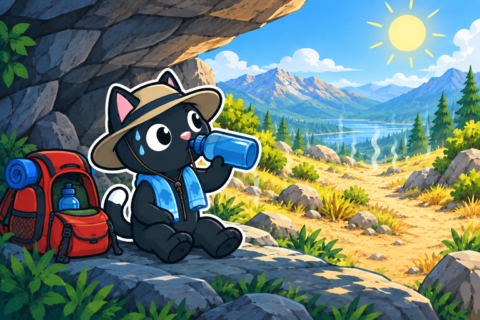
- Heat and sun. Consumption rises, especially on an exposed slope. Start earlier, seek shade, and slow down during the hottest hours.
- Cold. Thirst feels weaker even though the body continues losing fluid. A warm drink may make drinking easier.
- Altitude. Dry air and faster breathing increase losses. A climb also takes longer than its distance suggests.
- Wind. It speeds evaporation and hides sweat, making the need easy to underestimate.


Carry the supply securely
Divide water among several containers so losing one does not remove your entire supply. Place bottles close to your back and balance them on both sides, checking that you can reach them while moving. Easy access during a short stop makes it simpler to monitor your condition. Protect a shared soft container from stakes, cookware, and other sharp items. On a narrow trail, a puncture could otherwise reduce the whole group’s supply at once.
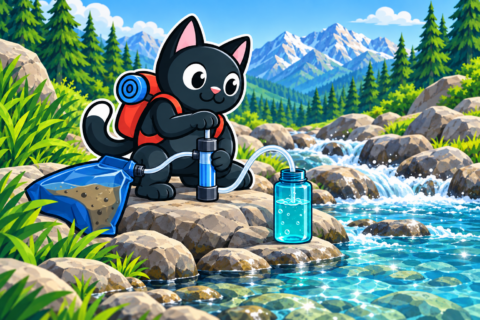
Carry a treatment method suited to local sources and a backup option. A filter can clog with silt, tablets can run out, and a stove can exhaust its fuel. If this happens before a long dry section, the group needs another way to obtain safe water. Combining two methods makes a plan more resilient in a difficult region. Test how each selected method works in the expected conditions beforehand.

Monitor your condition
Severe thirst, unusual weakness, headache, dizziness, and infrequent urination require attention. Stop in a safe place, get out of the heat, and assess the group’s condition and remaining supply. Confusion, loss of coordination, or continued deterioration can indicate a dangerous condition. Contact emergency services in these cases.
Important: reduce carried water only when sources are confirmed. If the calculated amount is too heavy, change the start time, shorten the dry section, or choose another route. On a long crossing without reliable refills, hope for a stream cannot replace missing water. Always calculate water as part of the safety plan for the particular route.
Account for the whole group
The total calculation is built from each participant’s needs. Children, older people, and less experienced hikers may drink at a different pace and require additional stops. Before a dry section, ask everyone how much water remains: a sufficient group total can conceal an individual shortage. You will see who can reach the next source and who needs to refill sooner. The group can then adjust the plan before beginning the crossing.

Set checkpoints where the group compares its remaining water with the time to the next source. If consumption is higher than planned, decide immediately whether to slow down, divert to an alternative source, or turn back. Halfway through a dry section, for example, you may already see the supply falling faster than calculated. An early route change is easier than action with empty bottles.