Responsible behavior protects trails, campsites, water, and wildlife habitat. This guide presents the main principles of hiking without unnecessary impact.

Learn the local rules
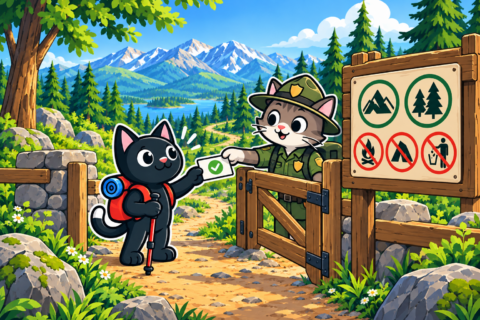
Before traveling, find the park requirements, reserve rules, or landowner guidance. They may govern campsites, group size, waste, food storage, stoves, and seasonal fire bans. An old fire ring does not mean fire is currently allowed. Restrictions change rapidly in dry periods, so check official information immediately before departure. A campsite familiar from an earlier trip may now have different rules.
Plan food and equipment around those requirements. Remove excess packaging at home, prepare a durable sealed rubbish bag, and carry the required food and toilet containers. This reduces improvised decisions about wrappers and storage at camp. Check these items with the rest of the kit before traveling or you may discover there is nowhere to carry food waste.
Protect the trail
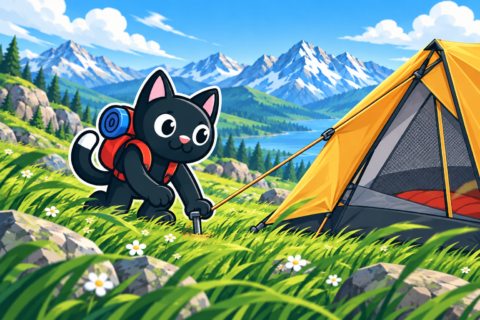
Stay on the route and do not cut switchbacks. A short mark on a slope quickly becomes an erosion channel. Repeatedly walking around puddles widens the trail and tramples living soil. If a section is passable and safe, walk through its center even when the side looks drier. At a dangerous place, use an official detour or change the route.

Where no trail exists, follow local off-trail guidance. Rock, gravel, and hard dry ground are generally more durable than wet moss or a flowering meadow. On durable ground, a large group may spread out to avoid creating a path, but only where rules permit. This does not help on a wet meadow because the surface itself is fragile.
Carry out everything you bring
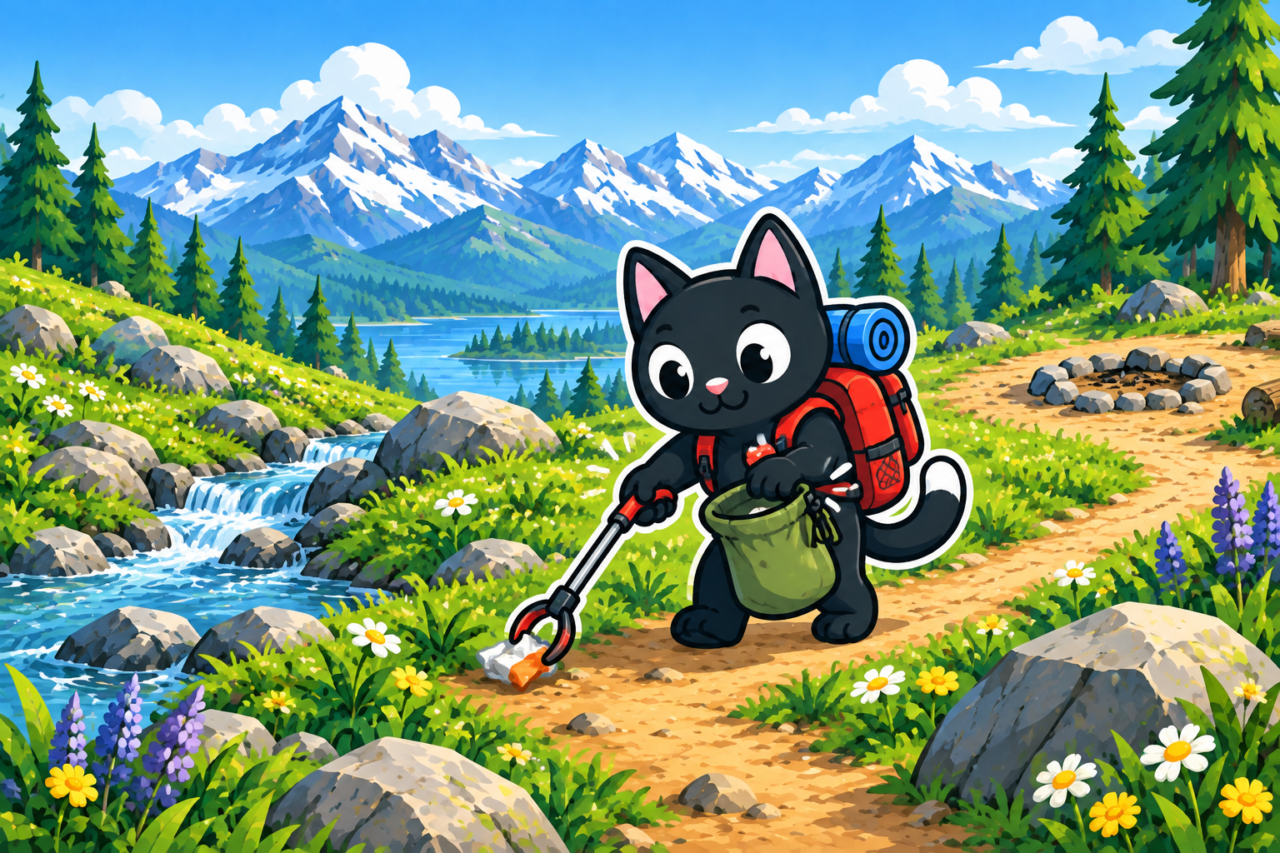
Bag packaging, wet wipes, tea bags, tape fragments, and food scraps. Peels and shells decompose slowly in cold climates, attract animals, and look out of place. Even a small food remnant can change wildlife behavior after you leave. Do not burn paper or plastic: material remains in ash, while toxic smoke and sparks create further problems.

Before leaving, inspect the break area, around the tent, and downwind bushes. Small packaging fragments are easier to see from near ground level. After a windy night, debris may lie farther away than expected. Pick up safe rubbish left by others when space permits. The site will be cleaner for those who follow.
Protect water
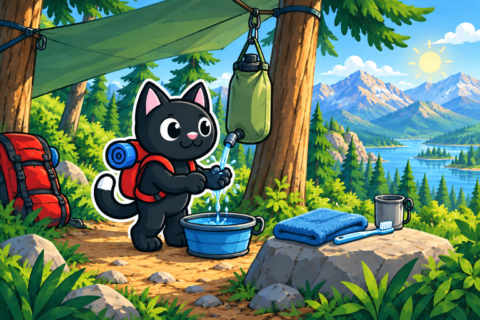
Do not wash dishes or bodies with cleaning products directly in a lake or stream. “Biodegradable” does not make a product beneficial to aquatic life. Collect water, move the locally required distance away, and dispose of strained wash water where permitted. Pack out food particles. Straining is especially useful after dinner when larger crumbs remain on cookware.
Use established toilets where provided. Elsewhere, waste rules depend on soil, elevation, season, and land status. Some places require all waste to be carried in special bags. Generic advice to bury it can cause harm, so learn the local method in advance. Deciding after dark at a rocky campsite is particularly difficult.

Leave nature where it is
Leave flowers, attractive stones, feathers, and historic objects where found. The next group can see the same place and the objects remain in their environment. Do not carve bark or rock. Homemade stone piles alter the landscape and can misdirect travelers. Official navigation markers are installed by those responsible for the trail.
Observe wildlife from a distance so it can continue normal behavior. Do not feed animals, and store food so odors do not bring them to people. An open product at camp can attract wildlife before evening. Quiet voices and moderate music preserve the space for other visitors as well.
Fire leaves a lasting mark
A stove is often safer and cleaner for cooking. Where fire is permitted, use an established facility, keep water nearby, and follow restrictions. Before leaving, confirm coals are cold to the touch or smoldering may continue. Do not burn the ground for one evening; recovery can take years. Include complete extinguishing time when planning departure.