A camping stove makes meal preparation easier but requires checked equipment and careful handling. This guide covers preparation, fuel, and safety rules.
Choose a location
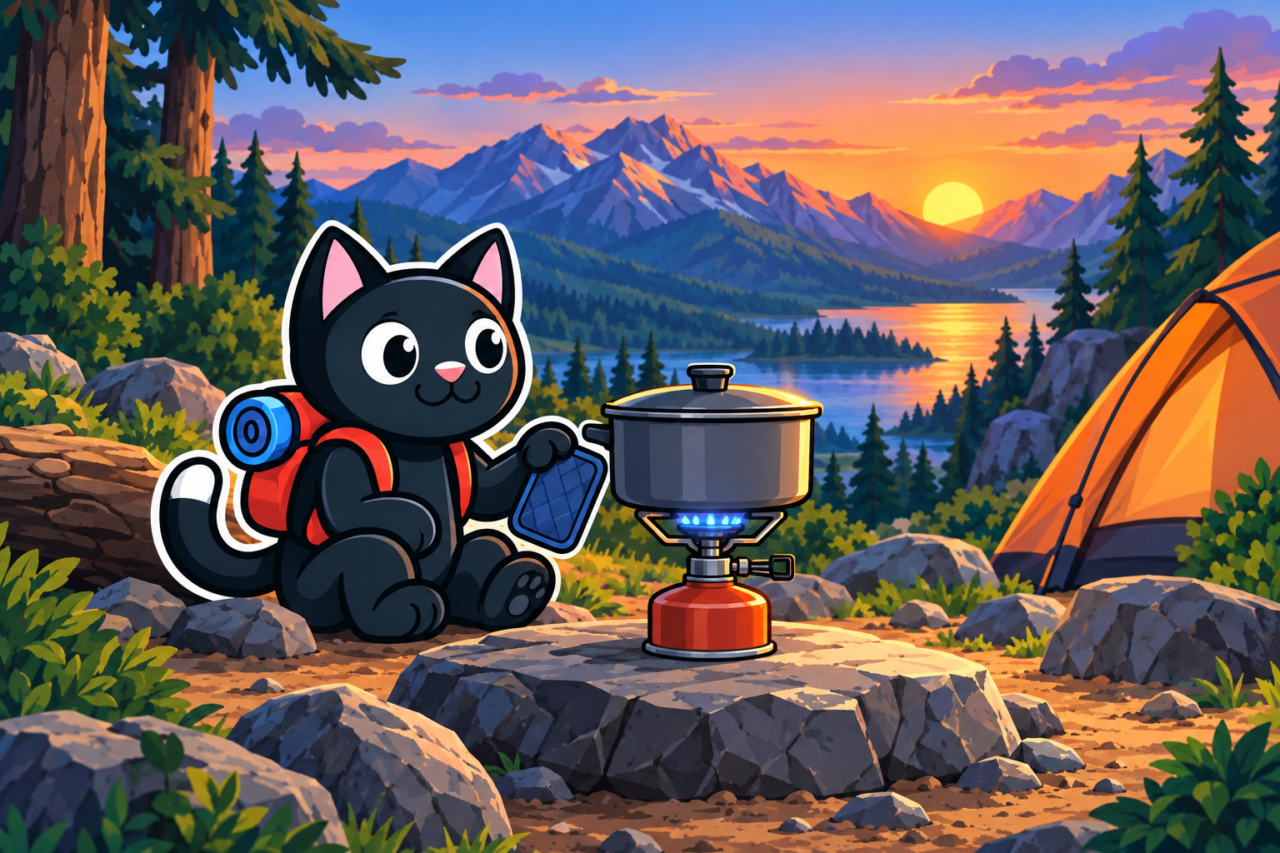
Set up the kitchen on a firm, level surface away from dry grass, branches, tents, and foot traffic. If someone passes near the pot, a level site reduces the chance of a spill. Check local rules: fire restrictions may also apply to stoves. If all flames are prohibited, plan a cold menu in advance.
Important: cook outdoors. Carbon monoxide can build up in a tent, vestibule, cave, or vehicle and cannot be detected by smell. A flame in these spaces also increases the risk of fire and burns. In heavy rain, use a spare cold meal or wait for suitable conditions outside. Cook in the open once precipitation no longer prevents the stove from being placed safely.


Inspect the equipment
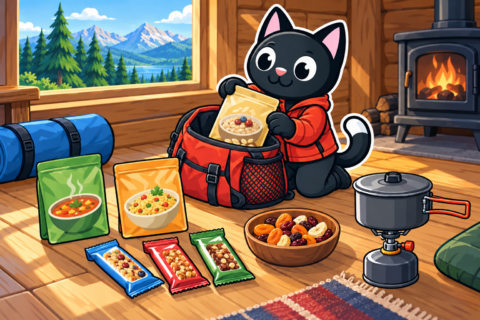
Before connecting anything, inspect the threads, valve, hose, and seals according to the manufacturer’s manual. Attach the fuel away from all flames. If you hear hissing or smell gas after assembly, shut off the supply and disconnect the system in a safe place. Find the source of the leak by following the instructions while the stove remains unlit. Testing connections with a flame is dangerous even when the source seems obvious.
The windscreen must suit the stove design. A tight screen around a stove mounted directly on its canister can overheat the fuel. Sheltering the flame this way can seem convenient at a windy campsite, making the warming canister particularly easy to overlook. Follow the layout and clearances specified by the manufacturer. Continue monitoring the system during cooking even when it appears stable.
Organize the work
Measure the water and prepare the ingredients before lighting the stove. Leave room in the pot for foam and stirring. If porridge rises to the rim, the hot contents can spill onto hands or the burner. Center the cookware on its supports so it does not wobble while being stirred. A pot that is too heavy or wide can overturn a compact stove.
Assign one person to the kitchen whenever the stove is running. Keep backpacks, children, and pets outside this area. Someone passing by could accidentally strike a hot handle. Turn it away from the walkway while keeping it clear of the flame. This lets the responsible person watch both the cookware and the open space around it.
In wind, reduce heat loss with a pot lid and only a windscreen approved for your design. A moderate flame often uses fuel more efficiently than a high one. When flames extend up the sides of the pot, some heat escapes into the air. If a meal only needs boiling water, cover it and let it soak. The stove will run for less time while the food finishes without further heating.
Calculate the fuel
Record fuel use during a test at home and multiply it by the planned number of boils. Then account for cold, wind, altitude, and the starting water temperature. After a cool night, heating the same amount may take longer than it did at home. Leave a reserve for delays that add unplanned boils. Divide the fuel among participants so the whole group knows how much remains and who carries each container.
Do not judge a canister empty by feel alone. If the manufacturer permits weighing, compare its mass before and after a test meal. This home trial will help estimate consumption across several trail dinners. Liquid-fuel systems have their own filling and maintenance procedures. Study the manual before departure so you do not have to learn the connections at camp in the evening.
Finish cooking
Turn off the fuel supply first and wait for the stove to cool. Only then disassemble and pack the system. Place a hot pot where nobody can step on it or grab its handle. If the group is moving around camp, choose a place away from traffic beforehand. Dispose of washing water and food scraps according to local rules and away from bodies of water.

Inspect the connections before lighting the stove again in the morning. Check that the system is dry and free of contamination from the night. If a part is blocked, you will discover it before placing the pot. A familiar inspection and cooking sequence prevents hurried improvisation beside a flame. Breakfast can then be prepared calmly while the group packs.

If something goes wrong
If the pot tips over, move away from the hot water first and assess any burns. Turn off the stove when it is safe. Cool a fresh burn with clean, cool water and follow first aid guidance. Ice and greasy products are unsuitable. Contact emergency services for a serious injury while maintaining a safe distance from hot cookware.

Disassemble a blocked stove only after it has cooled completely and in accordance with the manual. While dinner waits, quickly clearing a hot jet may seem tempting. Improvised cleaning with a needle can damage it. A cold backup meal lets you finish the evening without rushing. Postpone the repair until home if campsite conditions prevent careful work.
Before leaving, make sure all heat has dissipated without touching the ground or equipment. Collect small parts and inspect the cooking area. Packaging or food scraps are easy to overlook in grass, especially after a late meal. Pack the kitchen only after this check.