Staying in touch with family or friends is an important part of a safety plan. Here is what information to leave, how to set a check-in deadline, and what actions to agree on.
What to give your contact
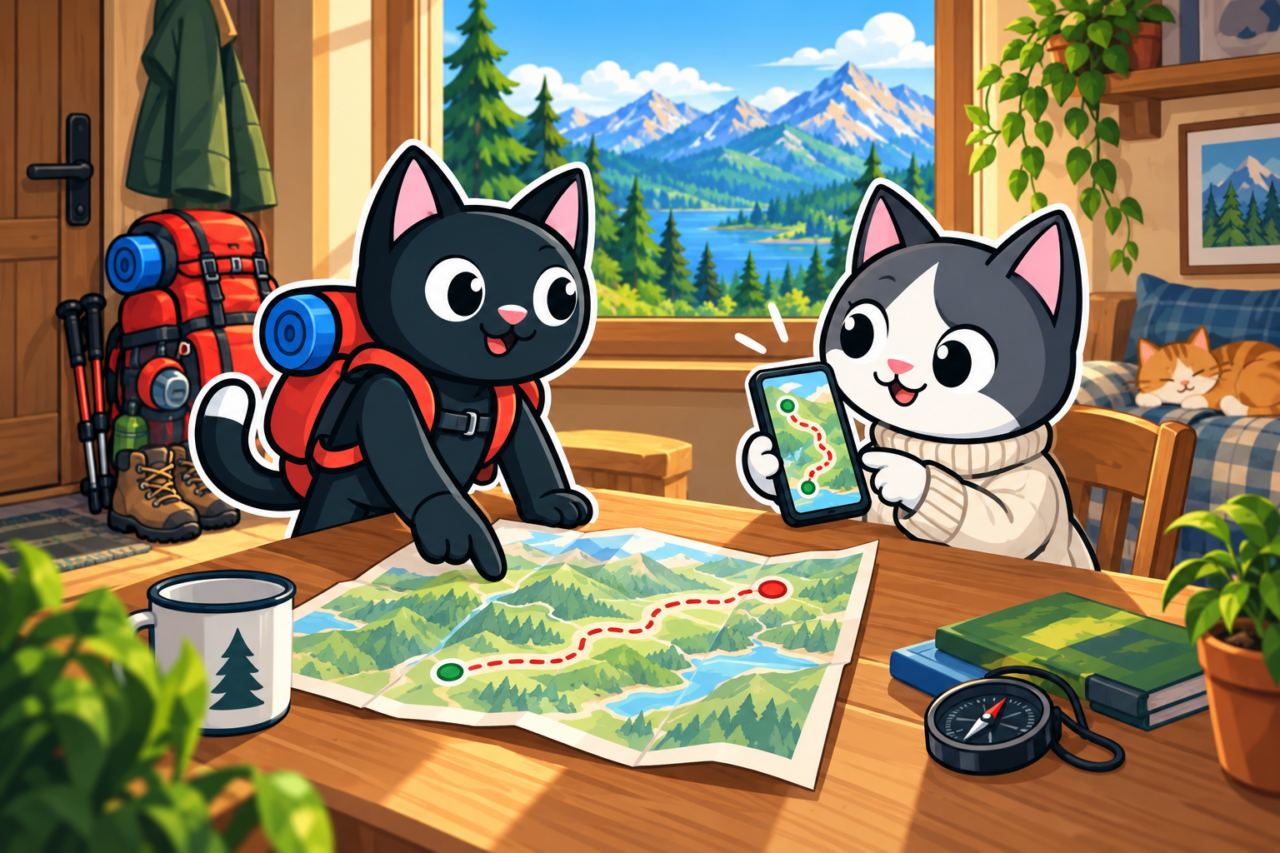
- the area and the start and finish points;
- the route on a map;
- the dates;
- the group members and their phone numbers;
- if you are driving, where the car is parked, plus its make, color, and license plate;
- a backup plan explaining where you will go if the main route is closed.





Send an ordinary image of the map along with the track file. It can be opened without a specialist app, so your contact can see the route even if they do not use hiking software. Otherwise the file may be inaccessible at the very moment they need to understand where the route goes.
Two deadlines
Agree in advance on two times related to your return. If the group is delayed, your contact will need a clear reference point for judging the silence. The two deadlines mean different things.
- when you expect to return;
- when continued silence means it is time to act.


Allow extra time between your expected return and the point when action begins, accounting for travel, weather, and stretches without reception. Choose the margin for the specific route. For example, you may still be following the plan in an area without service but be unable to reply. “If we do not answer for a long time” forces your contact to decide how serious the delay is. An agreed waiting period accounts for ordinary disruptions before you even set out.
What to do if you fail to check in
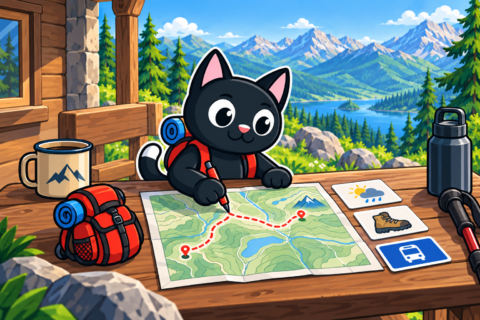
Decide in advance whom your contact should call first and what information to give rescuers. They should save the country’s emergency number and the details of local rescue services rather than looking for them in a stressful moment. If you are delayed, they can begin with the agreed step and have the group’s plan at hand. If there is reason to suspect an emergency, they should not wait for the deadline.

Your contact should give rescuers facts: the time of the last communication, the group’s location, and its intended next move. If you reported your position before losing contact, they can name a specific section. The last confirmed point narrows the search area; together with the plan for the next leg, it also indicates the group’s likely direction.
Discuss what a lack of response means on your particular route. In some areas, service exists only at the trailhead and after the finish, so there may be no messages during the hike. Live-location markers can remain at an old point while you keep moving. Your contact should check the time of the last update: a stationary marker may show where the signal disappeared several hours earlier. This helps them judge how current the on-screen data is.


Check your equipment
A carrier’s coverage map gives only an approximate picture; a phone may have no signal in a particular valley even when nearby coverage is shown. Without a mobile network, dialing 112 on an ordinary handset does not guarantee a successful call. Emergency calling, messaging, and satellite features vary by country and device. Check the official documentation in advance so you know what will be available on the route.
For a remote route, decide whether you need satellite communication. Check its coverage area, subscription period, and procedure for sending a message, because these determine whether the device will work for your trip. Send a test message according to the manufacturer’s instructions before leaving. You can learn the steps calmly and resolve anything unclear before you need to communicate from a remote place.
Important: never press a real SOS button simply to test a device. Use the manufacturer’s designated test-message procedure. Even if you want to make sure every button works, follow the prescribed testing process.

During the hike
Whenever you have reception, send a short message saying where you are, whether everyone is well, and whether the plan has changed. State when to expect the next contact. If you change the route, give the new exit point and return deadline because the old information describes a different journey. Check that the message was delivered; an entry in the outbox does not mean the recipient received it. Otherwise the person at home may continue relying on outdated information.
Send a separate message after leaving the route to say that the hike is over. Your contact may miss your reappearance online, so it is not a substitute for a clear return message. If you are delayed on the way home, mention that too, especially before the agreed deadline. The home coordinator may still be waiting for news from the trail, and a brief explanation clarifies which part of the journey is delayed.
Run a rehearsal at home
The day before departure, send a test message in the same format you will use during the hike. Your home contact can check that the map link opens, the coordinates are visible, and the group’s phone numbers are saved. If something is inaccessible, you can fix it together before leaving. If the plan is stored in the cloud, prepare a separate copy; access to a shared file may disappear if its owner’s phone runs out of power.
Keep a short checklist beside the route plan explaining the sequence of actions after a delay. It should include the permitted waiting time and the services to contact. Once the deadline passes, your contact can find the next step in one place instead of trying to remember a pre-trip conversation or searching for individual numbers under stress.