A beach hike combines a day on foot with the sea: the trail follows the shore, reaches coves, or finishes on a beach. Around Antalya, these hikes appear on the Lycian Way between Phaselis, Tekirova, Çıralı, Adrasan, and Cape Gelidonya. They range from short walks with time for a swim to long point-to-point hikes that take the whole day.

Being close to the sea does not determine difficulty. The coast includes rocky climbs, long exposed sections, and trails with no quick exit to a road. Before choosing a hike, compare its distance and elevation gain, check transport, and estimate how much time stops by the water will add.

Short Hikes by the Sea
For a first beach hike, choose a hike whose coastal section stays near a town or road. This makes it easier to shorten the day, turn around early, and leave enough time for swimming.
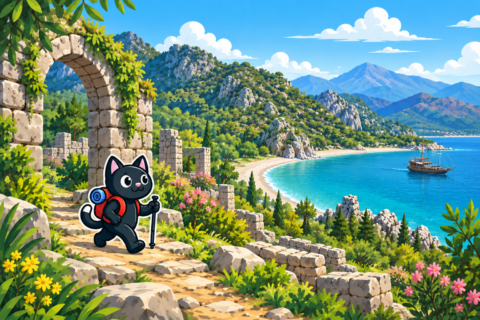
- Phaselis along the shore — the easy hike west of Çamyuva passes several beaches on the way to the ancient city. Our short option was 6 km with 130 m of elevation gain.
- Tekirova to Phaselis — a technically easy section of the Lycian Way covering approximately 5 km each way. If you return on foot, include the additional 5 km in the plan from the start.
- Olympos and Çıralı combine a walk through the archaeological site with access to the sea. You can also make a separate ascent to the Chimaera flames and return to the village.
- Kalkan and Patara suit a relaxed day by the sea: continue from the ancient city along the beach and dunes within the permitted areas.


Long Coastal Hikes
On long hikes, the beach is one point in the day, while distance, elevation gain, and rocky terrain create most of the effort. For a point-to-point hike, decide on the trailhead, finish, and transport between them before setting out.
- Tekirova to Çıralı — a coastal hike of approximately 21–22 km. The first part follows a mountain road before becoming a mountain trail, with several small wild beaches along the way.
- Gelidonya Lighthouse — our out-and-back hike past coves and beaches was 20 km with approximately 730 m of gain. The point-to-point hike from Karaöz to Adrasan via the lighthouse is approximately 22–24 km.
- Çalış and Stone Bay offer several options on pine-covered slopes above the sea. Our tracks covered 8–12 km with 430–730 m of gain; the long descent to the white cliffs crosses loose ground.
- Hikes around Kaş cross limestone slopes with views of bays and islands. A short distance may still take considerable time because of rock, heat, and repeated climbs.

How to Choose a Hike
For a short walk with several stops by the water, choose the coastal hike to Phaselis. If you want to cover more distance while keeping the option to shorten the day, walk from Tekirova to an intermediate point and return on a loop. The full crossing to Çıralı and the hike to Gelidonya Lighthouse require an early start and experience of long hiking days.
Set the walking objective first, then add time for swimming, ruins, and rest. During the first third of the hike, compare your actual pace with the plan. If the group is falling behind, shorten the hike before passing the last practical return point.

Sea, Heat, and Season
A coastal trail remains hot even beside the water. Exposed rock heats up, shade may be scarce, and a sea breeze can conceal how quickly you are losing fluid. Spring and autumn are generally more comfortable for long hikes. In summer, choose a short familiar hike, start early, and avoid leaving the most exposed sections for the middle of the day.
Swimming helps you cool down, but it takes time and does not replace drinking water or resting in shade. Change into dry clothing when a long section remains and check how much daylight is left before the finish. On exposed beaches, follow flags, wave warnings, and lifeguard instructions; in protected areas, observe seasonal restrictions.

What to Check Before Setting Out
- Save an offline map and GPX with the trailhead, beaches, alternative exits, and finish marked.
- Calculate water for the day when there are no confirmed refill points on the selected section.
- Check weather and restrictions, including heat, wind, sea conditions, forest closures, and sunset time.
- Wear closed, grippy footwear: sharp limestone and loose descents remain demanding even beside a beach.
- Arrange transport in advance for a point-to-point hike and save pins for the meeting places.
- Share your route, group details, and expected return time with someone you trust.
- Pack out your waste and observe barriers on beaches used by nesting sea turtles.