Socks, gaiters, and small accessories help protect your feet from moisture, sand, and friction. This guide explains how to match them to your footwear and route conditions.

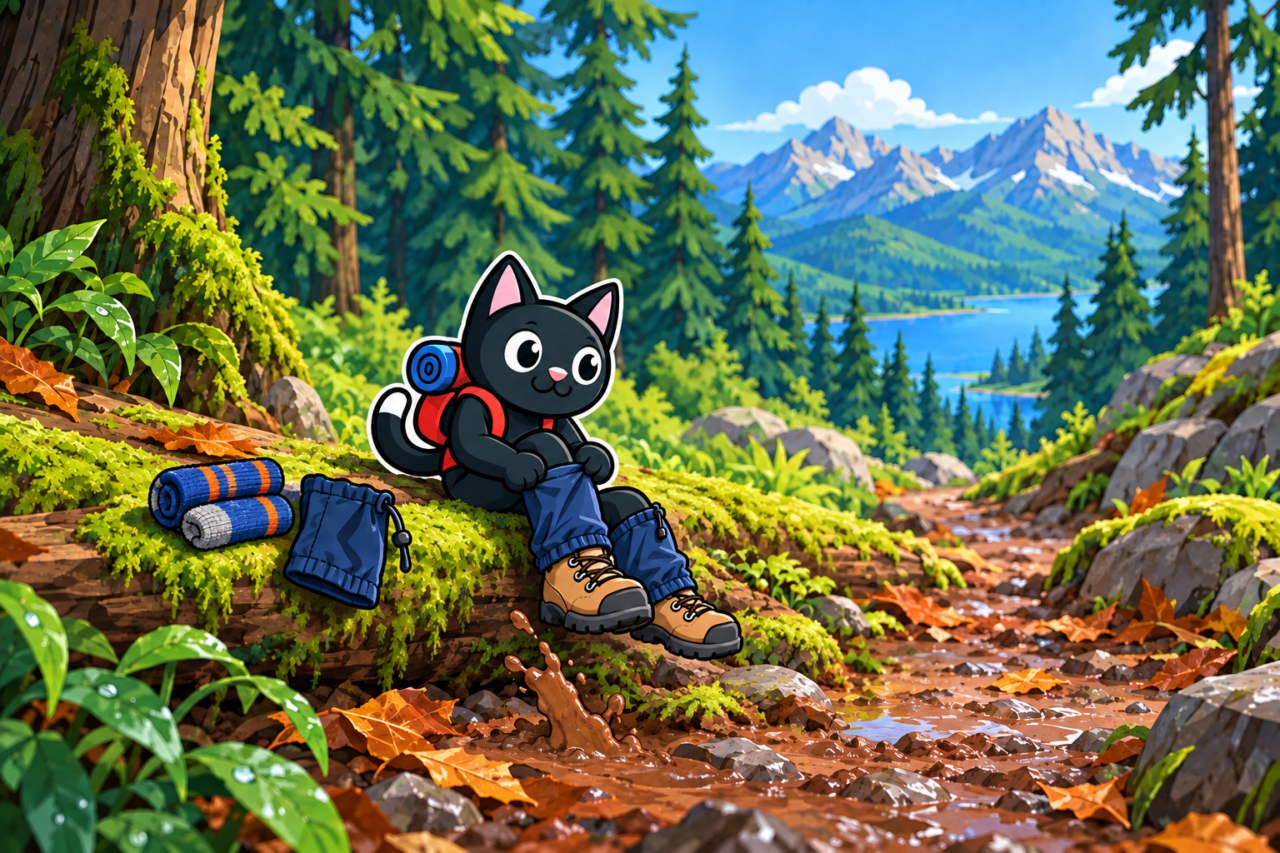
Hiking socks
A hiking sock should move moisture away, retain its fit, and cushion contact between the foot and footwear. Synthetic fibers dry quickly, while wool regulates temperature and develops odor more slowly. Blended fabric often combines both qualities, so the choice depends on how the pair fits your foot. Cotton absorbs a great deal of water and stays damp for a long time, which becomes particularly noticeable after a wet section.

Choose sock thickness together with the footwear you will use. Fabric that is too bulky takes up space and compresses the foot. A pair that is too thin may leave the heel without enough support inside the boot. The cuff should stay in place without leaving a deep mark, and the seams should not press on the toes with every step. Walk in the complete combination for a while: a brief fitting may not reveal the pressure.
Carry a separate dry pair for sleeping and enough trail socks for the available washing opportunities. Change damp socks during breaks so moisture does not remain against the skin until evening. Hang used pairs where the wind cannot carry them away. Even a few minutes of ventilation reduces dampness while you rest before the next section.



Do you need two layers?
Some people benefit from a thin liner sock under the main one, which transfers part of the friction to the contact between fabrics. For others, two pairs feel cramped and too warm, especially in already close-fitting footwear. Test the system on a long walk before the hike and judge it for yourself. If an edge rolls or a fold appears, stop and correct it before chafing begins.

Gaiters
Gaiters cover the top of the footwear and lower trouser leg, limiting the entry of debris and moisture. Low models keep out sand, small stones, and dry grass on the trail. High models provide better protection from mud, wet snow, and dew across a damp section. Gaiters do not make boots waterproof, however, and do not replace suitable trousers.
Try gaiters over your own footwear to assess all of the attachments together. The front hook should hold securely to the laces, and the top should remain in place as you walk. The underfoot strap must not sit on the tread or interfere with movement. Check the buckles as well: if they rub the other leg on stairs, the problem will quickly become more noticeable on a trail.
After rocky ground, inspect the lower strap that contacts the uneven surface. Damage is easier to notice before the attachment breaks completely. If the design permits replacement, a spare cord of suitable strength can serve as a temporary repair. It will hold the gaiter in place until you can make a proper repair.
Useful small items
- Spare laces are the correct length and pass through every loop on the boot.
- Dressings and tape stay in a dry pouch and are applied at the first signs of rubbing.
- Insoles are tested with the footwear; a new shape can alter the fit and create pressure.
- Light camp sandals give the feet a rest where their weight is justified and the surface is safe.
- A footwear bag keeps dirt away from the sleeping bag and clean clothes.


Daily care
Wash your feet in the evening, inspect the skin, and let it dry completely. Shake sand from the footwear and remove the insoles so they can dry separately. Keep wet items in a shaded, ventilated place. Glue and synthetic fabric can be damaged near a campfire or stove even when you are tempted to speed up drying.

Important: numbness, increasing pain, or a change in skin color means you should stop and assess the problem. Continuing with these signs places further load on an already irritated foot. Check the footwear and socks while you can still investigate the cause calmly. Suitable accessories are usually barely noticeable and let you focus on the trail.
Assemble a foot-care kit
Put a spare trail pair and dry sleeping socks in a separate pouch. Add dressings, a short length of tape, and a familiar care product. Keep the pouch accessible while walking so you do not have to unpack the entire backpack at the first sign of rubbing. Mark where blister-care materials sit in the first aid kit to make them easier to find during a break.


Before the trip, wear the footwear, socks, and gaiters together. Walk on stairs and through tall grass, checking strap tension through different movements. The entire setup should remain in place without constant adjustment. If rain begins on an exposed slope, familiar fastenings will be quicker to correct.
After the hike, wash socks at the temperature shown on the label and dry them completely. Clean sand from the gaiters and inspect their seams and fastenings. If you find a worn seam, repair it calmly at home before the next trip. Reliable attachments will save time and help keep your feet dry on the route.