Permits and restrictions determine where you may walk, camp, and light a fire. Here is how to check the current rules before your trip.
Determine the area’s status
First identify the types of land your route crosses: national park, nature reserve, wildlife sanctuary, border zone, private property, or municipal forest. A route may pass through several zones with different rules. Camping in the first does not mean you may camp in the next. Find the official website and managing authority for every section. If the wording conflicts, request written clarification so you understand the requirements before departure.
Check publication dates when reading notices. A section may be temporarily closed after a fire or flood while hiking maps still show the old route. Recent local news and rescue-service updates reveal what has happened since an older description was written. Check notices at the trailhead too, because a map may not yet reflect a closure.

Arrange the documents
Some permits are issued immediately, while others take several working days. An application sent just before departure may not be approved in time. You may need passport details, the group list, dates, campsites, and the leader’s contact details. Describe the route you genuinely intend to follow so the document matches the plan. If you change it, for example by moving a campsite, ask whether a new application is required.
- save the electronic confirmation and application number;
- carry the identity document specified in the access rules;
- download the rules for offline viewing;
- record the administration phone number;
- check whether the vehicle needs a separate permit.
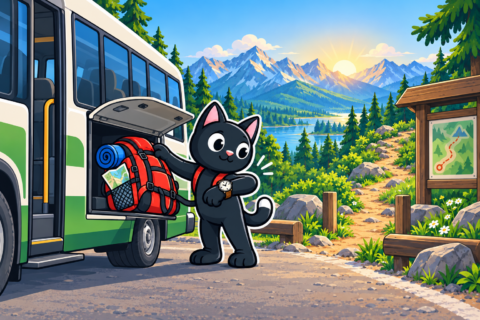
Admission, parking, and a tent pitch may require separate bookings. Before paying, confirm what the price includes, when registration closes, and how refunds work. An entry confirmation may not include a campsite if that is booked separately. Reception at remote checkpoints can be poor, making documents hard to open online. Prepare the confirmations in advance so they are ready at registration.
Account for seasonal closures
Sections may close in spring because of muddy conditions or animal breeding, in summer because of fire risk, in autumn because of hunting, and in winter because of avalanche danger or closed roads. Knowing the reason helps identify nearby areas that also need checking before you change plans. A different route in the same seasonal conditions may be subject to similar restrictions.

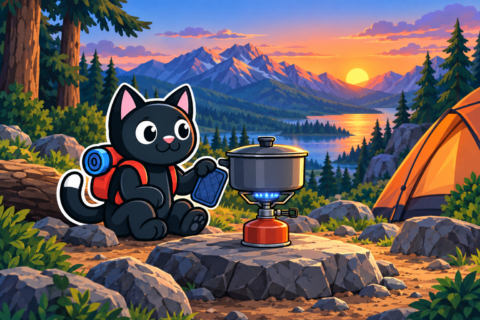
An open-fire ban normally covers campfires and may also include stoves and grills. Find the precise definition in the official rules because it determines how you can cook. If stoves are permitted, use one on a stable surface away from dry vegetation and keep a way to extinguish the flame immediately. Permission does not remove the need to control fire while cooking.
Respect route boundaries
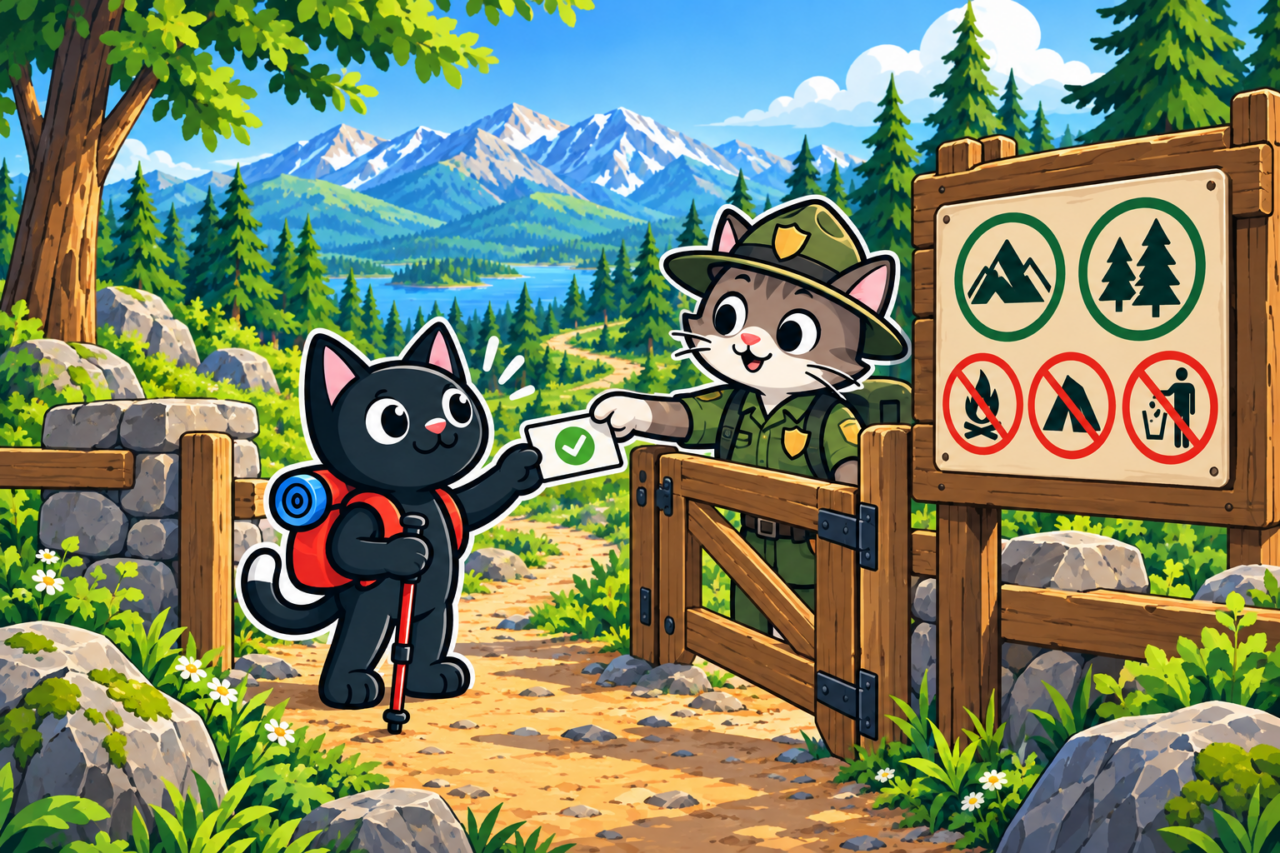
Some areas allow walking only on marked trails and camping only at designated sites within a specified pitch. These rules protect fragile soil and reduce disturbance to wildlife. A convenient-looking spot beside a legal campsite may already lie outside it. If an old track reaches a locked gate, new sign, or fence, the current signs take priority. A line showing where someone once walked does not prove continued access.


Dogs, bicycles, drones, fishing, and plant collecting have separate rules. Permission to hike says nothing about which of those activities are allowed. You may be permitted on a trail without being allowed to bring an animal. Before hiking with a dog, check leash requirements and dog-free zones.


Prepare a backup plan
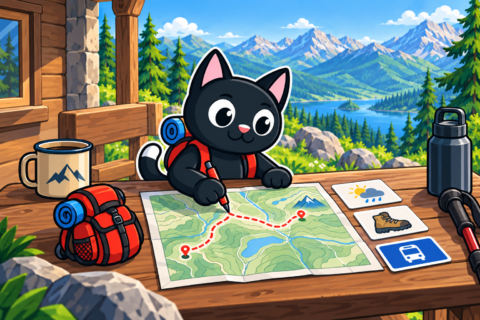
Keep an alternative route outside the restricted area. If a permit does not arrive, the road closes, or a ranger announces a new rule, postpone the trip or use the backup. You may learn only at the entrance that a planned section is unavailable. Trying to bypass controls can result in a fine and endanger both nature and the group. A preselected alternative lets you adjust the trip within the stated rules.
After the hike, remove from a public trail report any advice that leads through a prohibited section. Otherwise readers may treat it as a valid option. Include the date when you checked the rules and link to the official source. This lets people consult current requirements even if conditions changed again after your return.
If rules change after booking, keep the correspondence and documents. They record the conditions under which the trip was arranged and help with a calm refund discussion. The closure notice also explains to companions why an agreed route must change.